


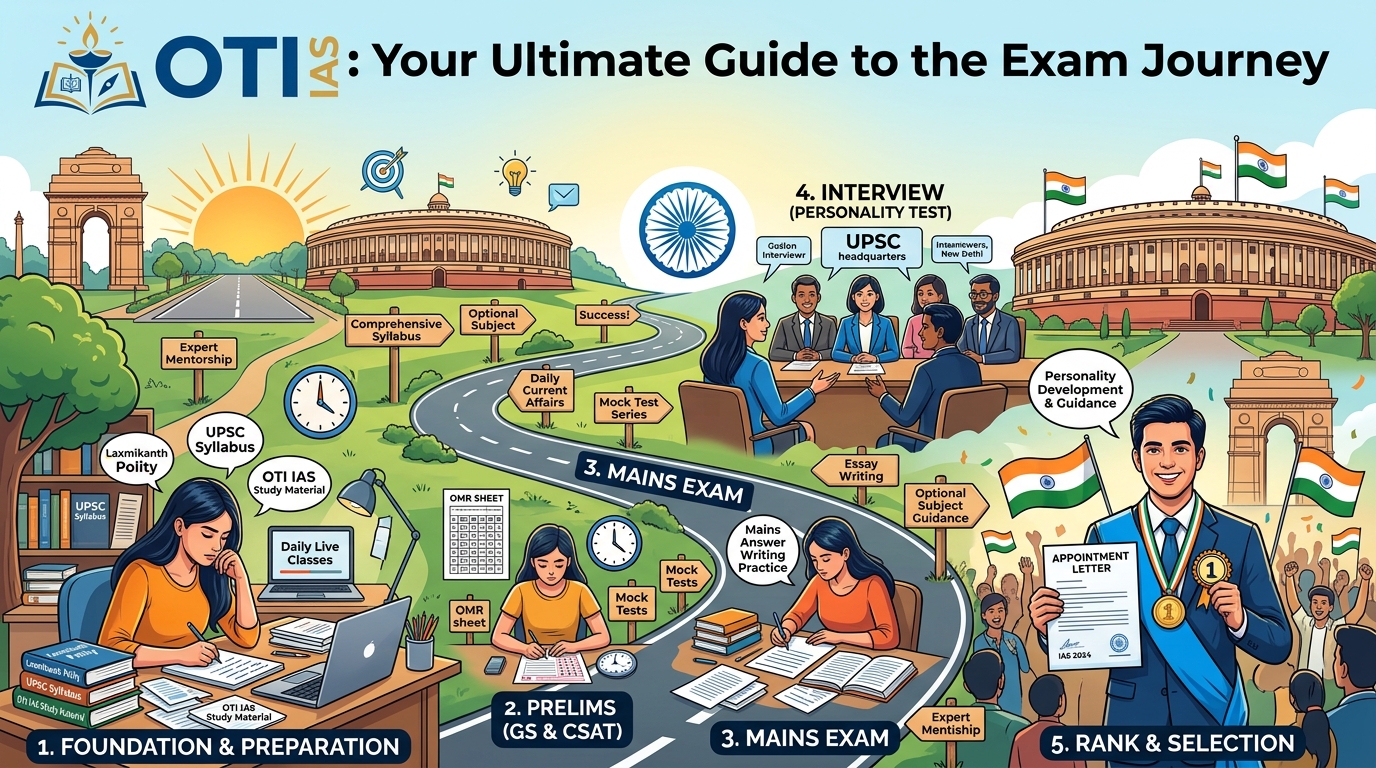
Are you ready to embark on an incredible journey towards becoming a civil servant? The OTI IAS exam is your gateway to a prestigious career in the Indian Administrative Service. With countless aspirants vying for limited seats, it’s essential to equip yourself with the right knowledge and strategy. Whether you’re just starting or looking for ways to enhance your preparation, this guide will provide you with all the insights needed for success. Let’s dive deep into what makes OTI IAS not just an exam but a transformative experience that paves the way for future leaders of our nation.
Eligibility Criteria for OTI IAS
To embark on the OTI IAS journey, candidates must meet specific eligibility criteria.
Applicants should hold a bachelor’s degree from a recognized university. This foundational requirement ensures that all candidates possess essential academic skills.
Age is another crucial factor. Generally, aspirants must be between 21 and 32 years old at the time of examination. However, there are relaxations for certain categories like SC/ST and OBC.
Citizenship matters too; only Indian nationals can apply for this prestigious exam. Foreigners or non-resident Indians need not apply.
Keep in mind any additional requirements set forth by the conducting body of OTI IAS. Staying informed about these details is vital for prospective candidates to ensure they qualify before diving into preparation.
Exam Pattern and Syllabus
The OTI IAS exam is structured in a way that tests both knowledge and analytical skills. It typically consists of multiple stages, including preliminary and main examinations.
The preliminary phase features objective-type questions across various subjects like General Studies, Current Affairs, and Basic Mathematics. This stage focuses on screening candidates for the next round.
Once you clear prelims, the mains come into play. Here, descriptive answers are required. The syllabus covers a wide range of topics including Governance, History, Geography, Environment, and Ethics.
Additionally, there’s an essay paper that challenges your ability to articulate thoughts clearly under time constraints. Understanding this pattern allows aspirants to strategize their study effectively.
Familiarizing yourself with the syllabus early on will help carve out a focused study plan tailored to your strengths and weaknesses.
Tips for Preparing for the Exam
Preparing for the OTI IAS exam requires a strategic approach. Start by creating a realistic study schedule that allocates time for each subject. Consistency is key.
Break your study sessions into manageable chunks to avoid burnout. Use techniques like the Pomodoro Method, which emphasizes focused work followed by short breaks.
Familiarize yourself with the syllabus and prioritize high-weightage topics first. This allows you to optimize your preparation effectively.
Practice previous years’ question papers regularly to understand the exam pattern and identify common questions. Mock tests can help gauge your readiness while building confidence.
Stay updated on current affairs through reliable news sources; this knowledge is crucial for both prelims and mains.
Don’t hesitate to join discussion groups or forums. Engaging with peers can provide fresh insights and keep motivation levels high throughout your journey.
Best Resources for Study Material
When preparing for the OTI IAS exam, selecting the right study material is crucial. Start with standard textbooks that cover the syllabus comprehensively. Indian Polity by M. Laxmikanth and NCERT books provide a strong foundation in core subjects.
Online platforms also offer great resources. Websites like Unacademy and BYJU’S feature video lectures tailored specifically for IAS aspirants. These can enhance your understanding of complex topics.
Don’t overlook current affairs! Reading newspapers daily, particularly The Hindu or Indian Express, keeps you updated on national issues which are pivotal for the exam.
Revision apps are another excellent tool. They help reinforce concepts through quizzes and flashcards, making learning interactive and effective.
Consider joining online forums or study groups where you can share insights and clarify doubts with fellow aspirants to enrich your preparation experience.
Strategies for Time Management during the Exam
Effective time management during the OTI IAS exam is crucial for success. Start by familiarizing yourself with the exam format and allocating specific time slots to each section. This ensures that you can cover all topics without running out of time.
Practice using a timer while taking mock tests. Simulating real exam conditions helps build your stamina and improves speed. Identify your strengths and weaknesses; this allows you to adjust your approach accordingly.
Prioritize questions based on difficulty. Tackle easier ones first to boost confidence, leaving more challenging questions for later when you’re warmed up. If stuck, move on—don’t let one question derail your entire plan.
Keep an eye on the clock but don’t obsess over it. Maintain a steady pace, checking in periodically to ensure you’re on track without creating unnecessary stress.
How to Stay Motivated throughout the Journey
Staying motivated during your OTI IAS journey can be challenging. Start by setting clear goals. Break down the syllabus into manageable chunks and celebrate small victories along the way.
Surround yourself with a supportive community. Join study groups or online forums where you can share experiences, ask questions, and exchange resources. Engaging with others makes the process less isolating.
Incorporate regular breaks in your study routine to avoid burnout. Use this time for activities you enjoy—like reading a book or going for a walk. A refreshed mind is more productive.
Visual reminders can also help keep motivation high. Create a vision board filled with images and quotes that inspire you as you work towards achieving your goal of OTI IAS success.
Remind yourself why you started this journey in the first place. Reflect on your dreams and ambitions regularly to reignite that initial spark of passion.
What to Expect on the Day of the Exam
On the day of the OTI IAS exam, expect a mix of excitement and nerves. Arriving early is essential to avoid any last-minute chaos. Familiarize yourself with the venue beforehand if possible.
Make sure you have all necessary documents ready: admit card, ID proof, and stationery. Check everything twice to ensure nothing is left behind.
Once inside, you’ll be assigned your seat—take a moment to settle in and breathe deeply. Scan your surroundings; it can help ease anxiety.
The atmosphere will likely be charged with tension as other candidates prepare themselves too. Focus on your own game plan rather than what others are doing.
When the exam begins, read through the instructions carefully before diving into questions. Time management becomes crucial at this stage, so keep an eye on the clock without getting distracted by it.
Results and Next Steps after the Exam
After the OTI IAS exam, candidates eagerly await their results. This moment can be both exciting and nerve-wracking. Results are typically announced a few weeks after the exam date, providing insights into your performance.
Once you receive your score, it’s important to analyze where you excelled and where improvement is needed. If you’re successful, congratulations! You’ll next enter an interview phase or further assessments based on your rank.
If the outcome isn’t what you hoped for, don’t get discouraged. Many successful aspirants faced setbacks before achieving their goals. Use this time to reevaluate your strategies and focus areas.
Engaging with fellow candidates through forums or study groups can also provide valuable support during this period. Whether moving forward or starting over, every step shapes your journey toward success in civil services.
Success Stories from OTI IAS Toppers
OTI IAS has produced many inspiring success stories that resonate with aspirants nationwide. These toppers come from diverse backgrounds, showcasing that determination can lead to achievement in the competitive realm of civil services.
Take, for instance, a candidate who juggled a full-time job while preparing for OTI IAS. Through disciplined study schedules and strategic planning, they not only cleared the exam but also secured a remarkable rank.
Another notable story is of an individual who faced initial setbacks yet turned them into stepping stones. Their resilience taught fellow aspirants that failures don’t define your journey; persistence does.
These experiences highlight the importance of personalized strategies and unwavering commitment. Each topper’s unique approach offers valuable insights on how to navigate challenges effectively in preparation for OTI IAS.
Conclusion
Embarking on the OTI IAS journey is no small feat. It’s a path filled with challenges, but also immense rewards for those who are determined and prepared. As you navigate through eligibility criteria, exam patterns, and study resources, remember that every step brings you closer to your goal.
Stay disciplined in your preparation and employ effective strategies for time management to ensure you maximize your potential during the exam. Keeping motivation high can sometimes be difficult—find what inspires you and use it as fuel on days when enthusiasm wanes.
On exam day, approach each section with calm confidence. The effort you’ve put in will serve as your guide throughout this crucial experience.
Once results are released, reflect on them thoughtfully. Whether they affirm your efforts or prompt new goals, consider them a part of an ongoing journey toward success.
Stories from past toppers remind us that persistence pays off. They faced obstacles just like anyone else but remained focused until they achieved their dreams.
The road may be long and winding, yet those who engage fully with each aspect of their preparation often find themselves rewarded beyond measure at its end. Embrace every moment; it’s all part of the learning process leading to a fulfilling career in civil services.